

Rear Dash Cams Buying Guide What To Look For In 20
🏆 Top Picks at a Glance
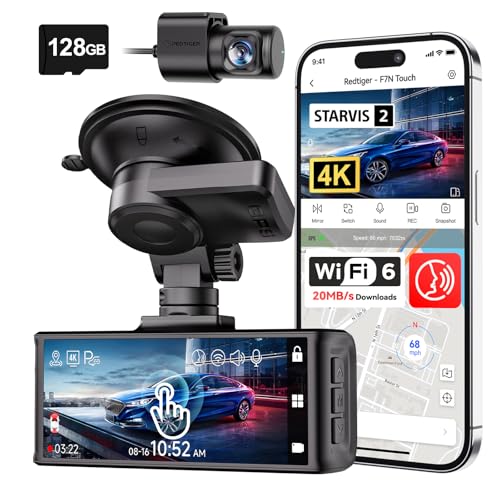 #1
#1
Best Overall
REDTIGER 4K STARVIS 2 Dash Cam Front and Rear, 5GHz WiFi 20MB/s Download, 128GB Card Included, Voice Control, Dash Camera for Cars with 3.18" Touch Screen, GPS, Loop Recording, Parking Mode(F7N Touch)
$139.99
Check Price → #2
#2
Runner Up
PRUVEEO 360° 4 Channel Dash Cam Front and Rear Inside Left Right, Dash Camera for Cars, Built-in GPS WiFi Night Vision, 24/7 Recording Parking Mode Monitor, 128G Card Included
$139.99
Check Price →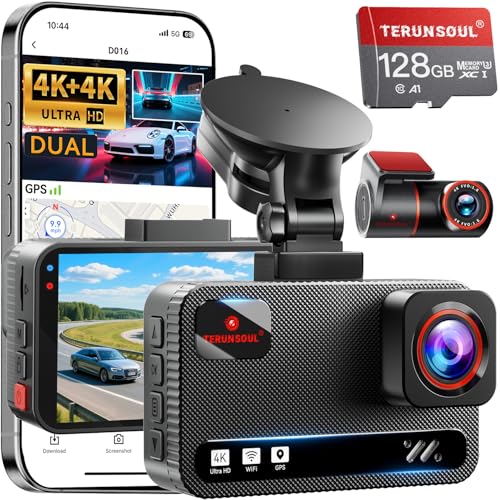 #3
#3
Best Value
TERUNSOUl 4K+4K Dash Cam Front and Rear, Free 128GB Card Included, 5.8GHz WiFi Dash Camera for Cars, Built-in GPS, G-Sensor, 170°Wide Angle, 3" IPS Screen, 24H Parking Mode, Support 512GB Max
$129.99
Check Price →Our Top Picks
Affiliate disclosure: if you buy through these links, we may earn a commission at no extra cost to you.
Factors to Consider
Video quality: resolution, bitrate, and real-world footage
⚡ Quick Answer
Resolution matters, but bitrate and codec determine how useful the footage actually is — 4K at a low bitrate can look worse than 1080p with a high-quality H.265 encode. In practice, look for cams that publish sustained daytime bitrates (typical useful range for 4K is ~40–80 Mbps; at 60 Mbps you’ll use roughly 27 GB/hour), and check sample clips taken at highway speeds to confirm license‑plate legibility. Also verify the camera’s loop‑segment length and overwrite behavior because storage requirements scale quickly with resolution and bitrate.
Table of Contents
Night vision and dynamic range (WDR/HDR)
Sensor size, lens aperture (f-number), and the DSP’s WDR/HDR implementation govern low‑light usability — larger 1/2" or stacked CMOS sensors and f/1.6–f/1.8 optics will retain more detail in shadows, while good WDR prevents blown highlights from headlights. Don’t rely on spec sheets alone: compare actual night clips for usable license‑plate and color fidelity, and check if the manufacturer uses IR or noise‑suppressing algorithms that can smear detail. Because night clips consume as much storage as daytime footage, plan your microSD size accordingly and confirm the app can quickly retrieve event clips recorded at night.
Reliability: temperature tolerance, power design, and firmware support
Pick units with automotive‑grade specs — look for stated operating ranges ±40–85°C, capacitor designs instead of cheap batteries for longevity, and a history of regular firmware updates from the vendor. Thermal throttling and firmware bugs are common causes of dropped clips; read firmware change logs and community reports to judge long‑term reliability. If you plan on parking mode, verify the unit’s low‑power draw and whether it supports buffered pre‑event recording to avoid losing incidents while parked.
Installation: wiring options, vehicle fit, and truck considerations
Decide between plug‑and‑play 12V adapters, OBD2 power supplies, or a hardwire kit to the fusebox — the latter is best for reliable parking mode but needs proper current‑limiting or a voltage cutoff to protect the battery. For trucks or vehicles with long wheelbases, confirm the rear cable length and whether the camera supports a separate power module or wireless rear modules to avoid long runs of coax. Good installers also secure GPS and antenna placement; confirm the app shows a GPS lock and timestamps to validate footage in disputes.
App, storage management, and parking‑mode behavior
Apps are the user interface for live view, clip download, and firmware updates — prioritize cameras whose apps offer direct original‑file downloads (not heavy recompression), stable Wi‑Fi pairing, and timestamp/GPS overlay options. For storage, use automotive high‑endurance microSD cards and plan capacities: 64–128 GB for 1080p dual cams, 256–512 GB for 4K rear cams if you want extended parking buffers; confirm the camera’s segment length (1/3/5 min) and overwrite logic. Finally, test the manufacturer’s parking mode claims: look for event pre‑buffering, low‑current standby, and reliable motion/impact wakeups rather than marketing buzzwords.
Frequently Asked Questions
Do I need a 4K rear dash cam or is 1080p enough?
4K improves fine detail like small license‑plate fonts and distant signage, but only if the camera maintains a high bitrate and excellent optics; a low‑bitrate 4K file can be worse than a high‑bitrate 1080p file. For two‑lane roads and urban use where plate legibility at distance matters, 4K rear cams are worth the extra storage and cost; for close‑range coverage in city driving, quality 1080p is often sufficient.
How much microSD storage do I need for a 4K rear camera?
Storage depends on bitrate and recording mode — as a rule of thumb, 4K at ~60 Mbps consumes about 27 GB per hour, so a 256 GB card yields roughly 9–10 hours of continuous footage. If you use parking mode with event‑only recording and higher compression (H.265), 256 GB is usually fine for most users; for continuous 24/7 recording or extended parking buffers choose 512 GB and always use an automotive high‑endurance card.
Can rear dash cams reliably record while parked?
Yes, but performance varies: reliable parking mode requires a low‑power standby implementation, a buffered pre‑event record (typically 5–20 seconds), and either a hardwire kit with battery protection or a dedicated battery pack. Many manufacturers quote “parking mode” without specifying current draw or pre‑buffer length — look for measured specs or user tests showing consistent wakeups from motion/impact to trust it in practice.
Which microSD cards are recommended for dash cams?
Use cards labeled for continuous video or “high endurance” such as SanDisk High Endurance or Samsung PRO Endurance; these are rated for frequent overwrite cycles and long sequential writes. Consumer A1/A2 or generic cards can fail prematurely under loop recording; check vendor compatibility lists and periodically reformat cards per the manufacturer’s interval recommendations.
Is GPS necessary in a rear dash cam?
GPS isn’t strictly necessary but adds valuable metadata — speed, location, and an accurate timestamp — that strengthens insurance or legal claims. If you rely on the footage for disputes, choose a unit with built‑in GPS or an external GPS puck and confirm the app overlays and exports the GPS track with the video file.
How do I test night vision and HDR performance before buying?
Request or watch unedited sample clips at identical locations and times: highway at 60+ mph, low‑light residential streets, and headlight‑on encounters. Evaluate plate legibility, highlight control (no blown lights), and noise patterns; pay attention to whether the vendor’s “night mode” is aggressive denoising that blurs edges — samples reveal what specs won’t.
Can dash cams be used on trucks or commercial vehicles?
Yes, but pick models with longer cables, wider mounting options, and robust power solutions — many truckers prefer hardwire kits with an isolation module or a separate battery box to avoid draining the vehicle battery. Also confirm the unit’s operating temperature range and whether the app supports fleet management or bulk firmware updates if you’re deploying multiple units.
Conclusion
Choose a rear dash cam with proven optics and a high sustained bitrate rather than chasing resolution alone; prioritize units with capacitor power designs, reliable parking‑mode behavior, and apps that let you download original files. For most drivers who value plate legibility and extended parking coverage, a 4K rear cam with a 256–512 GB high‑endurance card, hardwiring or battery pack, and a stable manufacturer app is the best compromise of quality, storage, and real‑world reliability.


