

Redtiger Dash Cams Vs Rove Dash Cams
When you start shopping for a budget-friendly dash cam, you will inevitably run into two names that dominate the search results: Redtiger and Rove. Both brands offer competitive pricing, aggressive marketing, and feature sets that look nearly identical on paper. However, once you look past the much-touted "4K" labels and examine the actual sensor performance, bitrate, and parking mode capabilities, the choice becomes much clearer. This comparison is designed for drivers who need to decide between these two heavyweights to ensure they aren't just buying marketing hype, but actual reliable evidence.
In this deep dive, we are looking specifically at the competitive landscape of dual-channel setups, such as the Redtiger F7NP and the Rove R2-4K Dual. We will break down the technical reality of their 5MP sensors, compare how their night vision handles low-light environments, and evaluate which brand offers the better balance of storage capacity and parking mode versatility. Whether you are a tech-savvy user looking for feature-rich kits or an everyday driver seeking a reliable, no-frills recorder, this guide will help you determine which brand belongs on your windshield in 2026.
Affiliate disclosure: if you buy through these links, we may earn a commission at no extra cost to you.
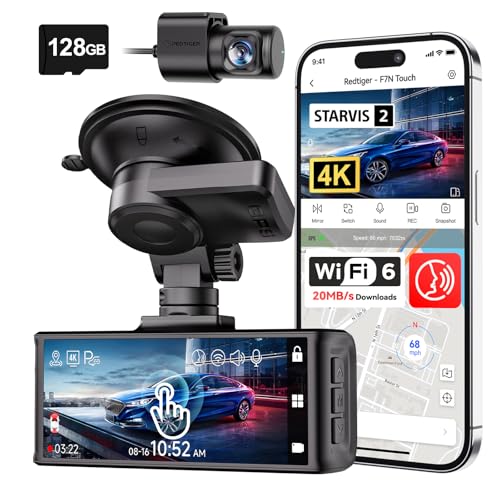
Table of Contents
- Models in this comparison
- Quick Verdict
- About Redtiger Dash Cams
- About Rove Dash Cams
- Head-to-Head: Video Quality and Resolution Realities
- Head-to-Head: Night Vision and Low-Light Performance
- Heads-to-Head: Parking Mode and Storage Capabilities
- Who Should Choose Redtiger Dash Cams?
- Who Should Choose Rove Dash Cams?
- Our Verdict
- Frequently Asked Questions
- Sources & References
Models in this comparison
Affiliate disclosure: if you buy through these links, we may earn a commission at no extra cost to you.

Quick Verdict
Choose Redtiger Dash Cams if...
- You prefer a more compact, less bulky hardware design for a cleaner windshield look.
- You want more aggressive image sharpening and a larger screen for easier on-device navigation.
- You are looking for feature-rich kits that often include GPS mounts and memory cards in the box.
Choose Rove Dash Cams if...
- You require higher storage capacity, with support for up to 512GB microSD cards.
- You want more versatile parking mode options, specifically including motion detection.
- You prefer a more natural color profile and higher bitrates for smoother moving-scene detail.
| Factor | Redtiger Dash Cams | Rove Dash Cams |
|---|---|---|
| Price Range (Approx.) | $129.99 (F7NP) to $169.99 (F7N Elite) | $109–$129 (R2-4K Dual) |
| Primary Video Profile | Aggressive sharpening; feature-rich kits with higher contrast. | Natural colors; higher bitrates for better motion detail. |
| Parking Mode Capabilities | Focuses on impact detection and time-lapse. | Includes motion detection, impact, and time-lapse. |
| Storage Capacity | Up to 256GB (F7NP). | Up to 512GB (R2-4K Dual). |
| Form Factor & Design | More compact/slim profile; larger screen options for navigation. | Slightly bulkier; focuses on a lean, single-camera-centric design. |
| Best For... | Users wanting feature-rich kits and easier on-device menu navigation. | Drivers seeking higher storage capacity and versatile motion-sensing parking mode. |
About Redtiger Dash Cams
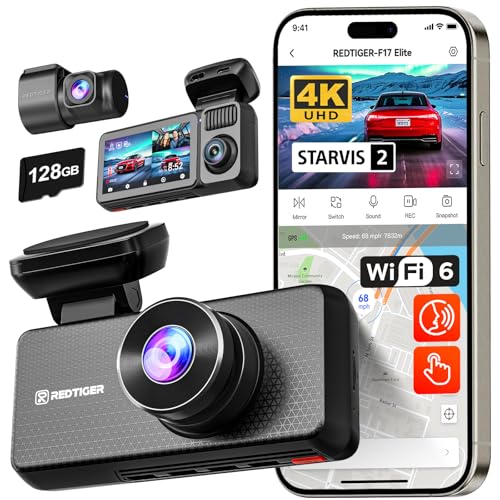
Redtiger positions itself as a feature-rich brand, often providing complete kits that include the front camera, rear camera, GPS mounts, and sometimes even memory cards. This makes them an attractive option for users looking for an all-in-one installation experience. Their design philosophy leans toward modern, feature-heavy hardware, such as the F17 Elite 4K 3-channel setup or the F7N series, which often includes larger screens for easier menu navigation and footage review.
When analyzing the technical performance of models like the F7NP, it is important to note that while they are marketed as 4K, they utilize 5MP sensors (such as the Sony IMX335). Because true 4K requires at least an 8MP sensor, these units are technically upsampling. To achieve the best results and avoid interlaced or pixelated video, it is recommended to run these cameras at 1440p resolution. In terms of image processing, Redtiger tends to use more aggressive sharpening, which makes edges pop on screen during the day, though it can occasionally introduce noise in flat, overcast skies. Their night vision performance is generally strong, with the F7NP handling headlight glare well and providing readable plates up to roughly 25 feet in near-darkness.
About Rove Dash Cams
Rove focuses on a leaner, more streamlined product philosophy. Their kits typically feature a strong front camera and a smaller screen, with the option to add a separate rear camera. This approach caters to drivers who prefer a more compact footprint on their windshield. For example, the Rove R2-4K Dual is significantly less bulky than its competitors, measuring 92mm x 64mm x 37mm, making it easier to tuck away behind a rearview mirror.
Technically, Rove's imaging leans toward a more natural color profile and higher bitrates. In fast-moving scenes—such as a vehicle cutting across lanes—the higher bitrate of the R2-4K can help retain more fine detail compared to more compressed footage. While the R2-4K also uses a 5MP sensor (the Sony Starvis 2 IMX675) and faces the same "false 4K" limitations as Redtiger, its higher-bitrate recording helps mitigate some of the resolution-loss issues. Rove also offers superior storage flexibility, with the R2-4K supporting up to 512GB microSD cards, doubling the 256GB limit found on the Redtiger F7NP. For parking mode, Rove provides more versatility through motion-detection capabilities, whereas Redtiger focuses more heavily on impact detection and time-lapse features.
Head-to-Head: Video Quality and Resolution Realities
When comparing the Redtiger F7NP and the Rove R2-4K Dual, the "4K" label in their marketing requires a technical reality check. Both cameras utilize 5MP sensors—the Redtiger uses the Sony IMX335 while the Rove utilizes the Sony Starvis 2 IMX675. Because true 4K resolution requires at least an 8MP sensor, neither of these cameras produces true 4K video. Instead, they produce upsampled footage. To avoid the artifacts associated with interlaced or upsampled video, it is highly recommended to run both of these dash cams at 1440p resolution.
In terms of actual footage performance, the Redtiger F7NP tends to apply more aggressive sharpening, which makes edges pop on screen but can occasionally introduce noise in flat, gray skies. Rove's image leans toward a softer, more natural color profile. However, the Rove R2-4K Dual holds an advantage in bitrate; it records at a higher bitrate, which helps retain better detail during fast-moving scenes, such as a vehicle cutting across lanes on a highway. While the Redtiger F7NP offers slightly better daytime video quality despite its older sensor, the Rove's higher bitrate provides a more stable visual experience in dynamic environments.
Head-to-Head: Night Vision and Low-Light Performance
Night vision performance is where the technical differences between these two brands become most apparent. During daytime driving, both brands handle light well, with the Redtiger F7NP's 150-degree lens and the Rove R2-4K's 155-degree lens both covering three lanes comfortably. On street-lit roads at moderate speeds, both cameras remain effective at keeping license plates readable. However, the nuances of their sensors change the experience on unlit roads. The Redtiger F7NP handles headlight glare well, recovering the image quickly, with plates remaining readable to roughly 25 feet in near-darkness.
The Rove R2-4K Dual produces a brighter overall image in dark settings, but it is more susceptible to "washout" from oncoming headlights compared to the Redtiger. While the Rove also maintains plate readability at roughly 20–25 feet, the Redtiger's ability to manage harsh light transitions makes it a slightly more consistent choice for night driving. For users prioritizing deep shadow detail and glare management, the Redtiger's algorithms offer a slight edge in difficult lighting conditions.
Heads-to-Head: Parking Mode and Storage Capabilities
When the vehicle is parked, the feature sets of these two models diverge significantly. The Rove R2-4K Dual offers a more versatile security suite, featuring motion detection alongside impact-sensing and time-lapse modes. This makes it a more robust option for users who want the camera to trigger specifically when someone walks past the vehicle. In contrast, the Redtiger F7NP focuses on impact detection and time-lapse, lacking the specific motion-triggered surveillance found in the Rove model.
Storage capacity also presents a clear distinction for long-term reliability. The Rove R2-4K Dual supports microSD storage up to 512GB, providing ample room for extended recording sessions or high-bitrate footage. The Redtiger F7NP is limited to a maximum of 256GB. For drivers looking to maximize their storage headroom to prevent frequent overwriting, the Rove offers a significant technical advantage.
Who Should Choose Redtiger Dash Cams?
Redtiger is the better choice for users who prioritize a feature-rich, "out-of-the-box" experience and a more modern interface. Because Redtiger often includes complete kits—featuring the camera, rear cam, GPS mounts, and often a memory card—it is an excellent option for those who want a streamlined installation process without hunting for individual accessories.
Specifically, you should choose Redtiger if:
- You prefer a more compact design: Models like the F7NP are significantly less bulky than Rove's offerings, making them easier to tuck behind a rearview mirror for a cleaner windshield aesthetic.
- You want easier navigation: The larger screens on Redtiger models (such as the 3.18-inch display on the F7NP) make it easier to review footage and navigate settings on the fly.
- You prefer aggressive image processing: If you like a visual style with higher contrast and sharper edges that make details "pop" on screen, Redtiger’s tuning will appeal to you.
- You want a feature-rich kit: For those who want a complete setup with GPS and dual-camera capabilities ready to go, Redtiger provides a more comprehensive package for the price.
Who Should Choose Rove Dash Cams?
Rove is the ideal pick for the driver who wants a reliable, no-frills recording solution with a focus on storage capacity and versatile security features. Rove tends to lean toward a more natural color profile and higher bitrates, which can be beneficial for capturing smooth, realistic motion in fast-moving traffic.
Specifically, you should choose Rove if:
- You need high-capacity storage: If you plan on recording long trips without frequent card swaps, Rove’s support for up to 512GB microSD storage (as seen in the R2-4K Dual) offers a significant advantage over Redtiger's 256GB limit.
- You want advanced Parking Mode: If you require more versatile surveillance while your car is parked, Rove’s inclusion of motion-detection alongside impact-sensing provides a more comprehensive security net than Redtiger's impact-only focus.
- You prefer natural image reproduction: If you find aggressive digital sharpening distracting, Rove’s tendency toward softer, more natural colors may be more visually pleasing for long-term viewing.
- You are looking for the best budget-to-storage ratio: For drivers looking to maximize their investment through larger storage capacities and consistent 4K-marketing-class performance at a lower entry price, Rove is a strong contender.
Our Verdict
Choosing between Redtiger and Rove depends entirely on whether you prioritize feature-rich hardware or versatile surveillance capabilities. While both brands market themselves as "4K" solutions, it is important to note that the 5MP sensors used in the Redtiger F7NP and the Rove R2-4K Dual do not support true 4K resolution. To avoid upsampled or interlaced video, we recommend running these units at 1440p resolution for the best clarity.
The Case for Redtiger: If you want a more modern, compact, and user-friendly interface, Redtiger is the winner. The F7NP features a larger 3.18-inch screen that makes navigating settings and reviewing footage much easier than the Rove's smaller display. Redtiger also tends to use more aggressive sharpening in its image processing, which can make license plates and road signs pop more during daytime driving. If you prefer a more compact footprint on your windshield, the slimmer design of the Redtiger models is a significant advantage.
The Case for Rove: If you prioritize security and storage capacity, Rove takes the lead. The R2-4K Dual offers more versatile parking mode options, including motion detection, whereas the Redtiger F7NP focuses primarily on impact and time-lapse. Furthermore, Rove supports up to 512GB of microSD storage, doubling the 256GB limit found on the Redtiger F7NP. Rove also leans toward a more natural color profile and higher bitrates, which can be beneficial for capturing detail in fast-moving traffic scenes.
Final Recommendation:
- Buy Redtiger if: You want a more intuitive user interface, a more compact design, and better daytime edge clarity. It is the better choice for drivers who want an easy-to-use, feature-rich kit for daily commuting.
- Buy Rove if: You need advanced parking mode features (like motion detection) or require higher storage capacity for long-term recording. It is the better choice for those who want a more robust surveillance-capable unit.
Frequently Asked Questions
Are these "4K" dash cams actually true 4K resolution?
No. While marketed as 4K, the 5MP sensors used in models like the Rove R2-4K Dual and the Redtiger F7NP do not have the pixel count required for true 4K (which requires at least 8MP). To avoid upsampled or interlaced video, it is recommended to run these cameras at 1440p resolution for the best clarity.
Which brand is better for parking surveillance?
The choice depends on your specific needs. The Rove R2-4K Dual offers more versatile parking modes, including motion detection alongside impact and time-lapse. The Redtiger F7NP focuses on impact detection and time-lapse, making it a solid choice for basic security, though it lacks motion-triggered recording.
How much storage capacity do I need for these cameras?
Storage requirements vary by model. For instance, the Rove R2-4K Dual supports up to 512GB microSD storage, making it ideal for long-term recording. The Redtiger F7NP supports up to 256GB, which is sufficient for most users but offers less headroom for high-bitrate footage compared to the Rove.
What is the difference in image style between Redtiger and Rove?
The difference is largely down to processing preference. Redtiger tends to apply more aggressive sharpening to make edges "pop," while Rove leans toward a softer, more natural color profile. Additionally, Rove typically offers higher bitrates, which can help retain more detail in fast-moving scenes.
Which camera is easier to install and use?
Redtiger often sells more complete kits that include the camera, rear cam, and GPS mounts in one box, which can simplify the initial purchase. In terms of usability, the Redtiger F7NP features a slightly larger 3.18-inch screen, making it easier to navigate settings and review footage compared to the more compact Rove models.


